





Cemantik

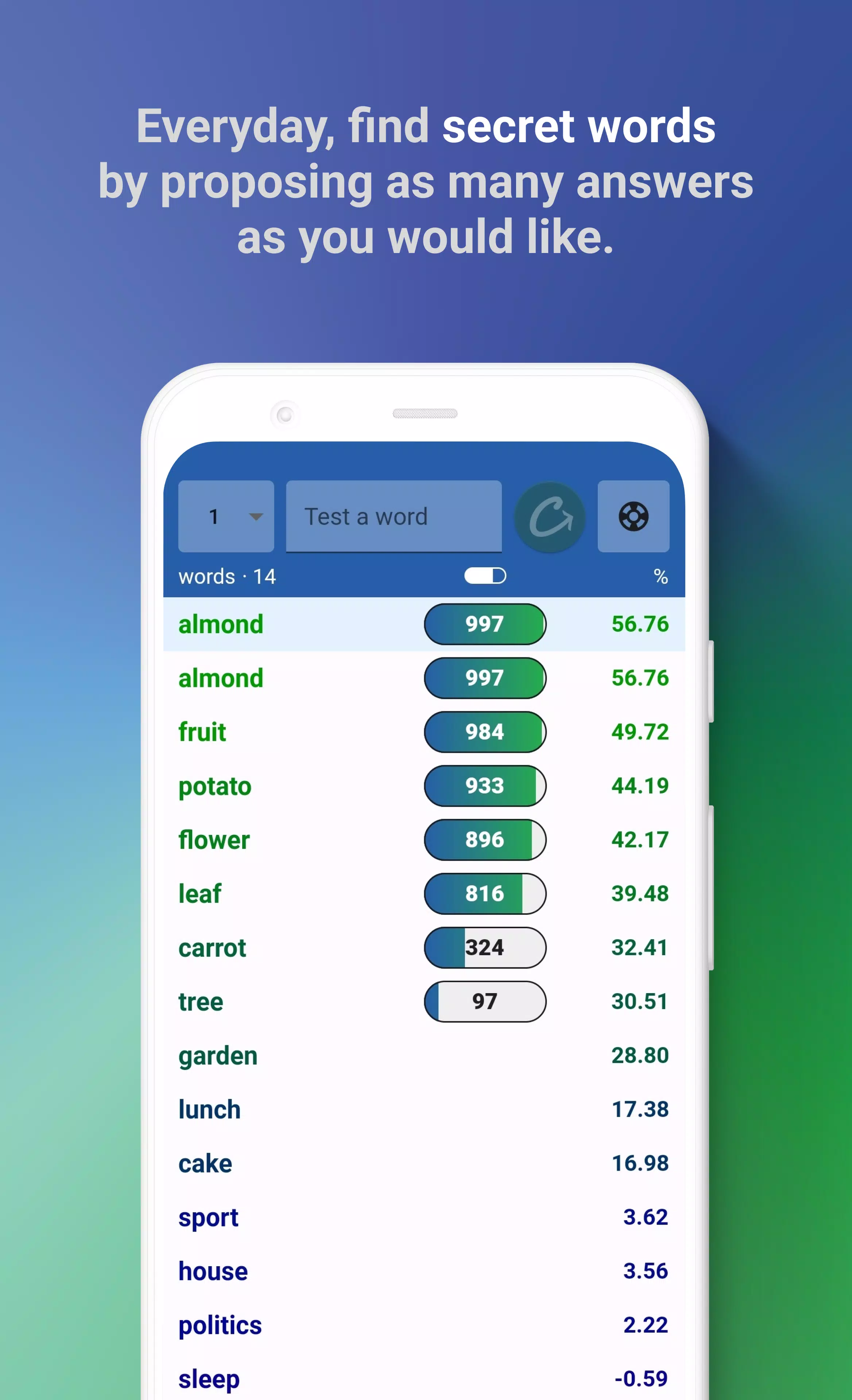
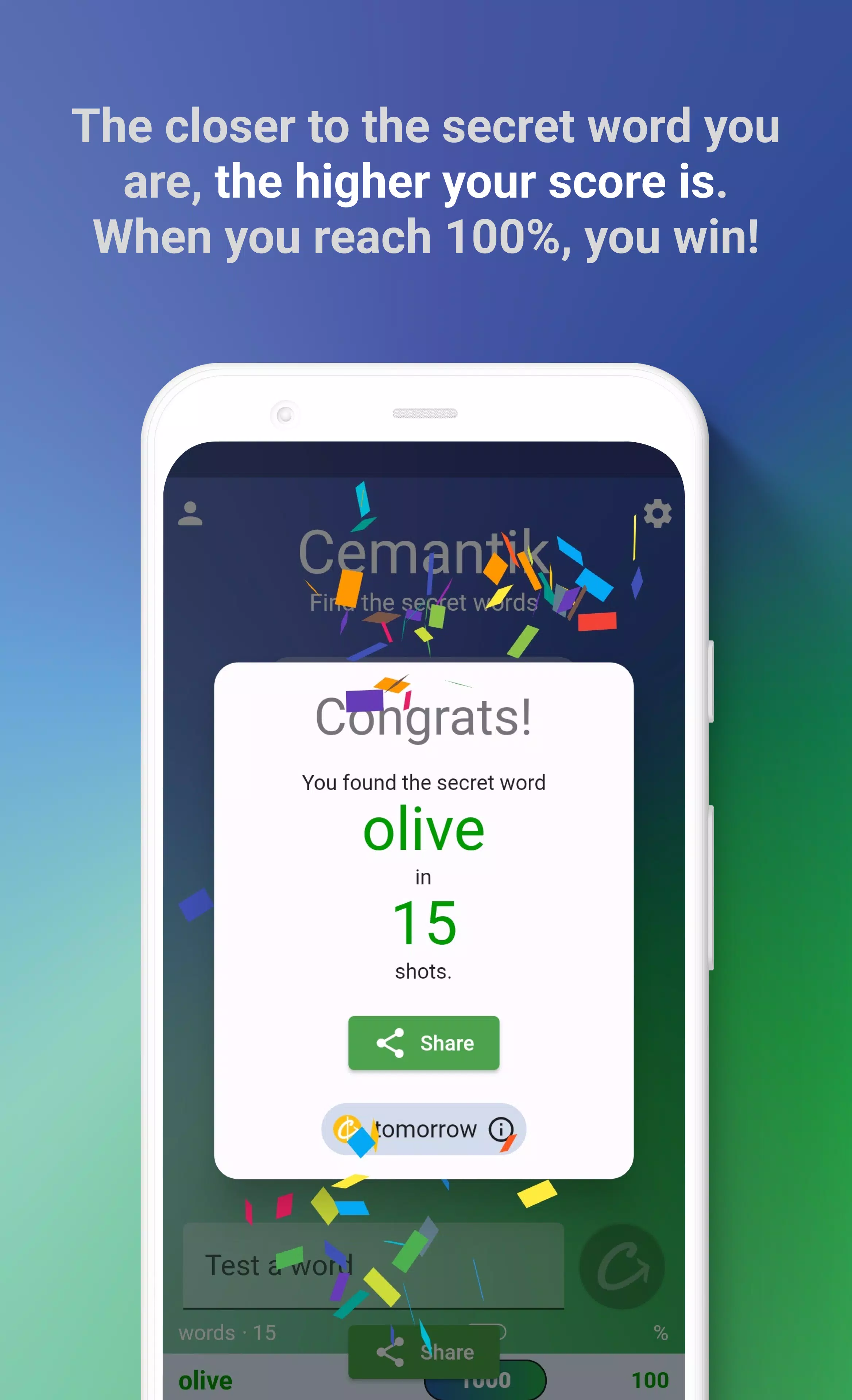
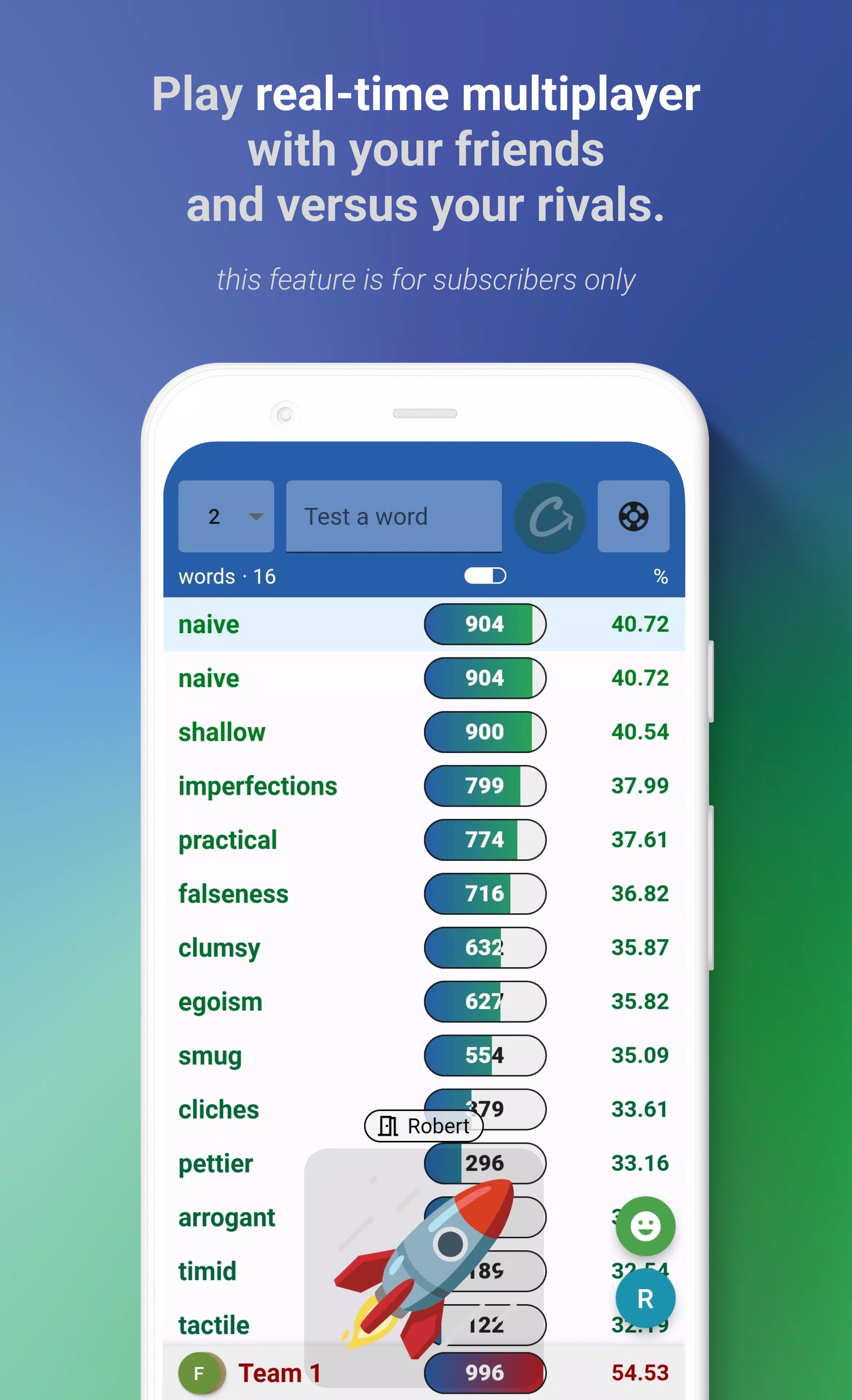
You're deep in the world of Cemantik — a word puzzle game where meaning, not spelling, rules the game. The goal? Uncover the hidden word of the day by analyzing how your guesses contextually relate to the secret word, based on how words are used together across billions of texts.
Let me help you crack the code, not just with strategy, but with insight.
🔍 How Cemantik Really Works (The Hidden Logic)
Unlike Wordle, where you guess letters and see which ones are in the right spot, Cemantik scores your guesses based on semantic similarity — how often your guess appears in similar contexts as the secret word.
For example:
- If the secret word is "tree", you might guess:
"forest"→ High score (they often appear together)"happy"→ Low score (no strong context link)"oak"→ High score (a type of tree)"sad"→ Could get a surprisingly high score if "sad" and "tree" appear in similar emotional or poetic contexts (e.g., "a sad tree in the rain")
That’s the twist: opposites can score high because of shared context — not meaning.
🎯 Your Goal: Find the Secret Word
Here’s how to win, even when you don’t know the word:
✅ Step 1: Start Broad
Try common, neutral, everyday nouns:
"dog""house""car""day""light""time""love"
These are often the secret words because they’re familiar, singular, and appear in diverse contexts.
✅ Step 2: Analyze the Scores
Look for patterns in your guesses:
- If
"forest"scores very high → Secret word is likely "tree", "wood", "bush" - If
"sun"scores high → Secret word might be "light", "day", "warm" - If
"sleep"scores high → Think "night", "rest", "bed" - If
"river"scores high → Think "water", "stream", "water"
✅ Step 3: Use Opposites Strategically
Try opposites — they might score higher than you expect:
- Secret word =
"day"→"night"might score very high - Secret word =
"love"→"hate"might score surprisingly well - Secret word =
"quiet"→"noise"might score high
Why? Because they’re often discussed in similar narratives — e.g., "the quiet before the storm" vs. "the noise of chaos"
✅ Step 4: Look for High-Scoring Anomalies
If "computer" scores 85% and "cat" scores -40%, but "keyboard" scores 90% — that’s a clue.
→ The secret word is likely "computer" or something tightly related like "keyboard", "mouse", "screen".
But if "cat" scores -100% and "dog" scores 95%? Then maybe the secret word is "pet", "animal", or "pet".
✅ Step 5: Use the “Hidden Scores” Mode? (Weekly Mode)
When scores are hidden:
- Play multiple rounds with the same set of 3–5 guesses
- Watch for relative rankings — which word always scores higher?
- Use that to build a semantic map
Example: If
"bed"always scores higher than"chair"and"table"across your guesses, and"sleep"scores 88%, then the secret word is likely "bed".
📌 Pro Tips (From the Experts)
-
Don’t overthink spelling — “car” and “automobile” may have different scores, but “car” wins because it’s simpler and more common.
-
Avoid rare words early — they rarely match common secret words.
-
Use compound words? Try:
"sunrise","dawn","evening"— they often appear in context with "day", "night", "light" -
Test "the" and "it" — they’re not good guesses. They’re too vague and appear everywhere, so they often score low.
-
Check your past puzzles — if you played yesterday and the word was
"day", and today"light"scores 92%, that’s a strong clue. -
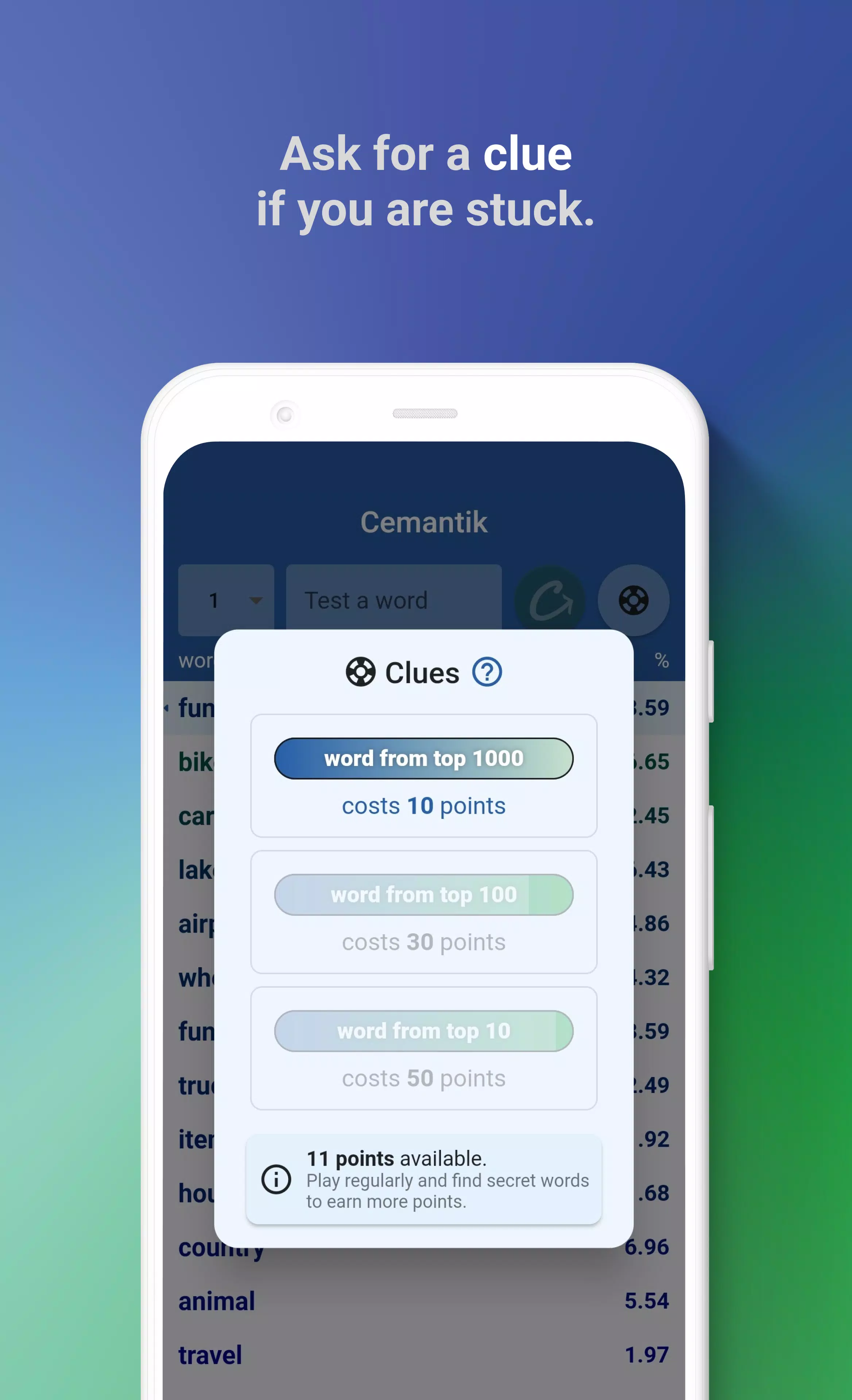
Use hints — if you’ve earned points, spend them on hints like:
- "The secret word is a common noun."
- "It’s often used in nature contexts."
- "It’s not a verb."
🛠️ Want Me to Help You Solve Today’s Puzzle?
Tell me:
- Your highest-scoring guess and its score
- One low-scoring guess (e.g., -70%)
- One surprising guess (e.g., "sad" scored 80%)
- The language (English or French)
And I’ll give you:
✅ The most likely secret word
✅ Why certain guesses scored high/low
✅ A list of 5 strong next guesses
🎯 You’re not just guessing words. You’re reading the mind of language.
Let’s uncover the secret — together.
Send me your clues, and I’ll help you crack today’s Cemantik puzzle. 🕵️♂️✨
Cemantik

You're deep in the world of Cemantik — a word puzzle game where meaning, not spelling, rules the game. The goal? Uncover the hidden word of the day by analyzing how your guesses contextually relate to the secret word, based on how words are used together across billions of texts.
Let me help you crack the code, not just with strategy, but with insight.
🔍 How Cemantik Really Works (The Hidden Logic)
Unlike Wordle, where you guess letters and see which ones are in the right spot, Cemantik scores your guesses based on semantic similarity — how often your guess appears in similar contexts as the secret word.
For example:
- If the secret word is "tree", you might guess:
"forest"→ High score (they often appear together)"happy"→ Low score (no strong context link)"oak"→ High score (a type of tree)"sad"→ Could get a surprisingly high score if "sad" and "tree" appear in similar emotional or poetic contexts (e.g., "a sad tree in the rain")
That’s the twist: opposites can score high because of shared context — not meaning.
🎯 Your Goal: Find the Secret Word
Here’s how to win, even when you don’t know the word:
✅ Step 1: Start Broad
Try common, neutral, everyday nouns:
"dog""house""car""day""light""time""love"
These are often the secret words because they’re familiar, singular, and appear in diverse contexts.
✅ Step 2: Analyze the Scores
Look for patterns in your guesses:
- If
"forest"scores very high → Secret word is likely "tree", "wood", "bush" - If
"sun"scores high → Secret word might be "light", "day", "warm" - If
"sleep"scores high → Think "night", "rest", "bed" - If
"river"scores high → Think "water", "stream", "water"
✅ Step 3: Use Opposites Strategically
Try opposites — they might score higher than you expect:
- Secret word =
"day"→"night"might score very high - Secret word =
"love"→"hate"might score surprisingly well - Secret word =
"quiet"→"noise"might score high
Why? Because they’re often discussed in similar narratives — e.g., "the quiet before the storm" vs. "the noise of chaos"
✅ Step 4: Look for High-Scoring Anomalies
If "computer" scores 85% and "cat" scores -40%, but "keyboard" scores 90% — that’s a clue.
→ The secret word is likely "computer" or something tightly related like "keyboard", "mouse", "screen".
But if "cat" scores -100% and "dog" scores 95%? Then maybe the secret word is "pet", "animal", or "pet".
✅ Step 5: Use the “Hidden Scores” Mode? (Weekly Mode)
When scores are hidden:
- Play multiple rounds with the same set of 3–5 guesses
- Watch for relative rankings — which word always scores higher?
- Use that to build a semantic map
Example: If
"bed"always scores higher than"chair"and"table"across your guesses, and"sleep"scores 88%, then the secret word is likely "bed".
📌 Pro Tips (From the Experts)
-
Don’t overthink spelling — “car” and “automobile” may have different scores, but “car” wins because it’s simpler and more common.
-
Avoid rare words early — they rarely match common secret words.
-
Use compound words? Try:
"sunrise","dawn","evening"— they often appear in context with "day", "night", "light" -
Test "the" and "it" — they’re not good guesses. They’re too vague and appear everywhere, so they often score low.
-
Check your past puzzles — if you played yesterday and the word was
"day", and today"light"scores 92%, that’s a strong clue. -
Use hints — if you’ve earned points, spend them on hints like:
- "The secret word is a common noun."
- "It’s often used in nature contexts."
- "It’s not a verb."
🛠️ Want Me to Help You Solve Today’s Puzzle?
Tell me:
- Your highest-scoring guess and its score
- One low-scoring guess (e.g., -70%)
- One surprising guess (e.g., "sad" scored 80%)
- The language (English or French)
And I’ll give you:
✅ The most likely secret word
✅ Why certain guesses scored high/low
✅ A list of 5 strong next guesses
🎯 You’re not just guessing words. You’re reading the mind of language.
Let’s uncover the secret — together.
Send me your clues, and I’ll help you crack today’s Cemantik puzzle. 🕵️♂️✨